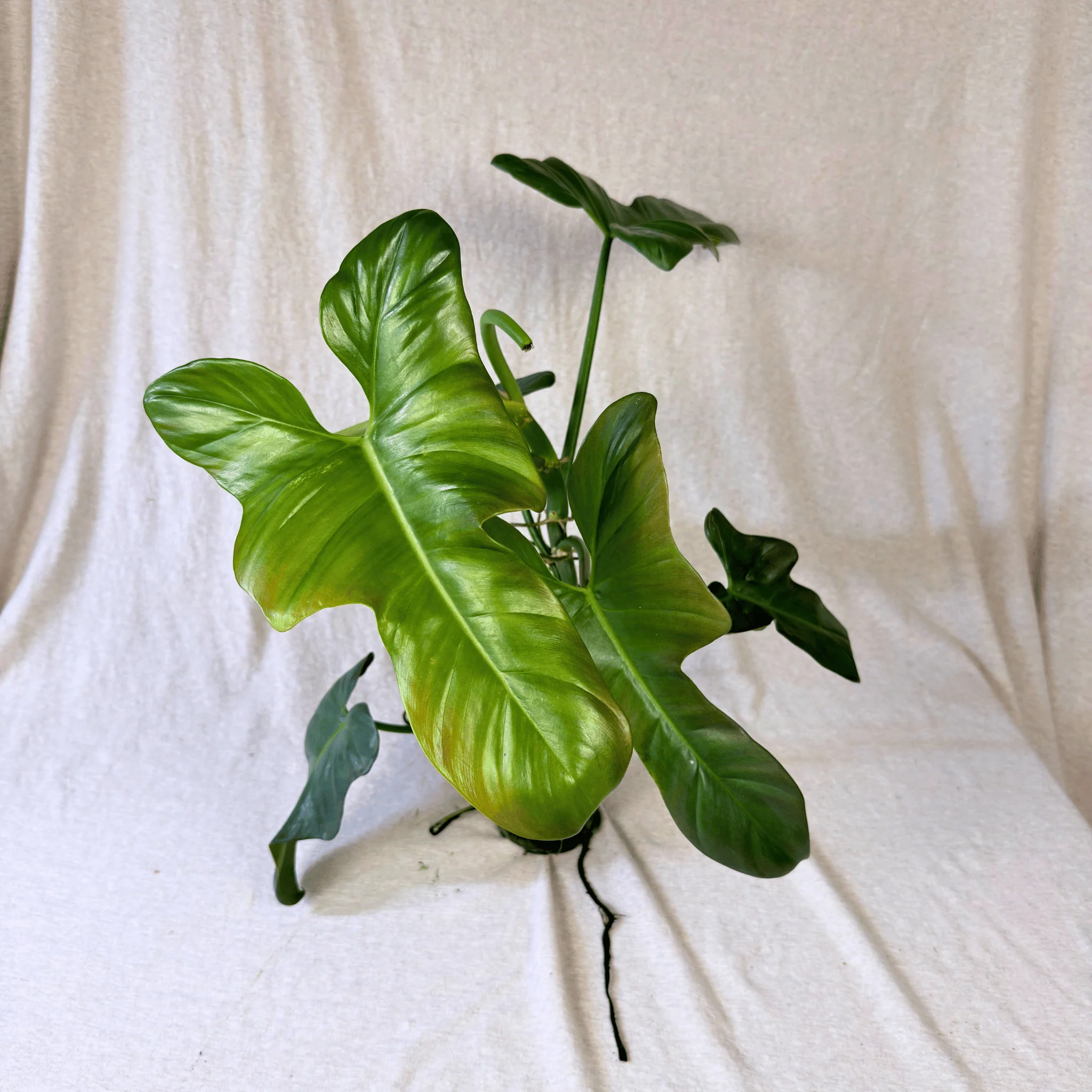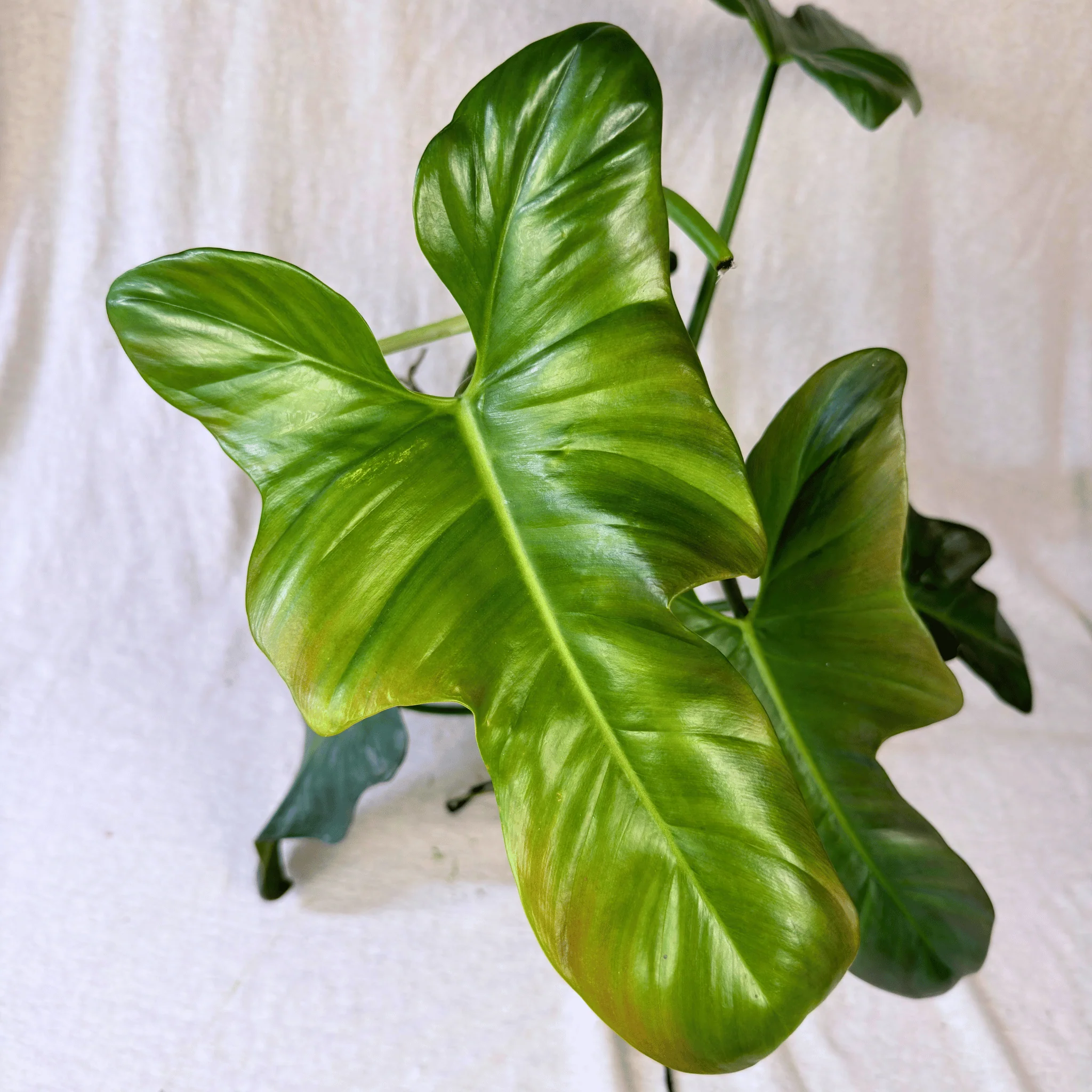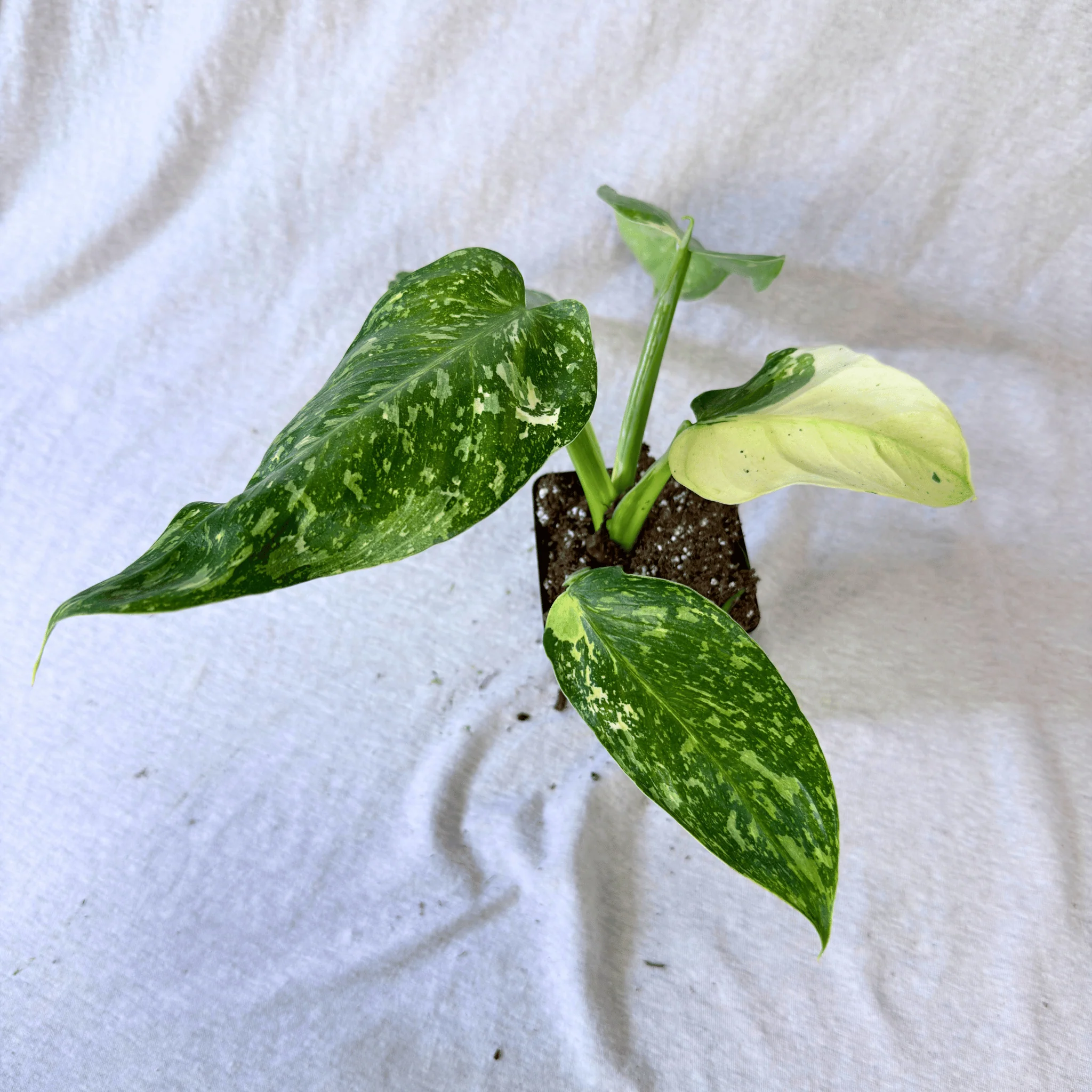

Monstera White Monster Denser
High-Expression Variegation With Serious Collector Appeal
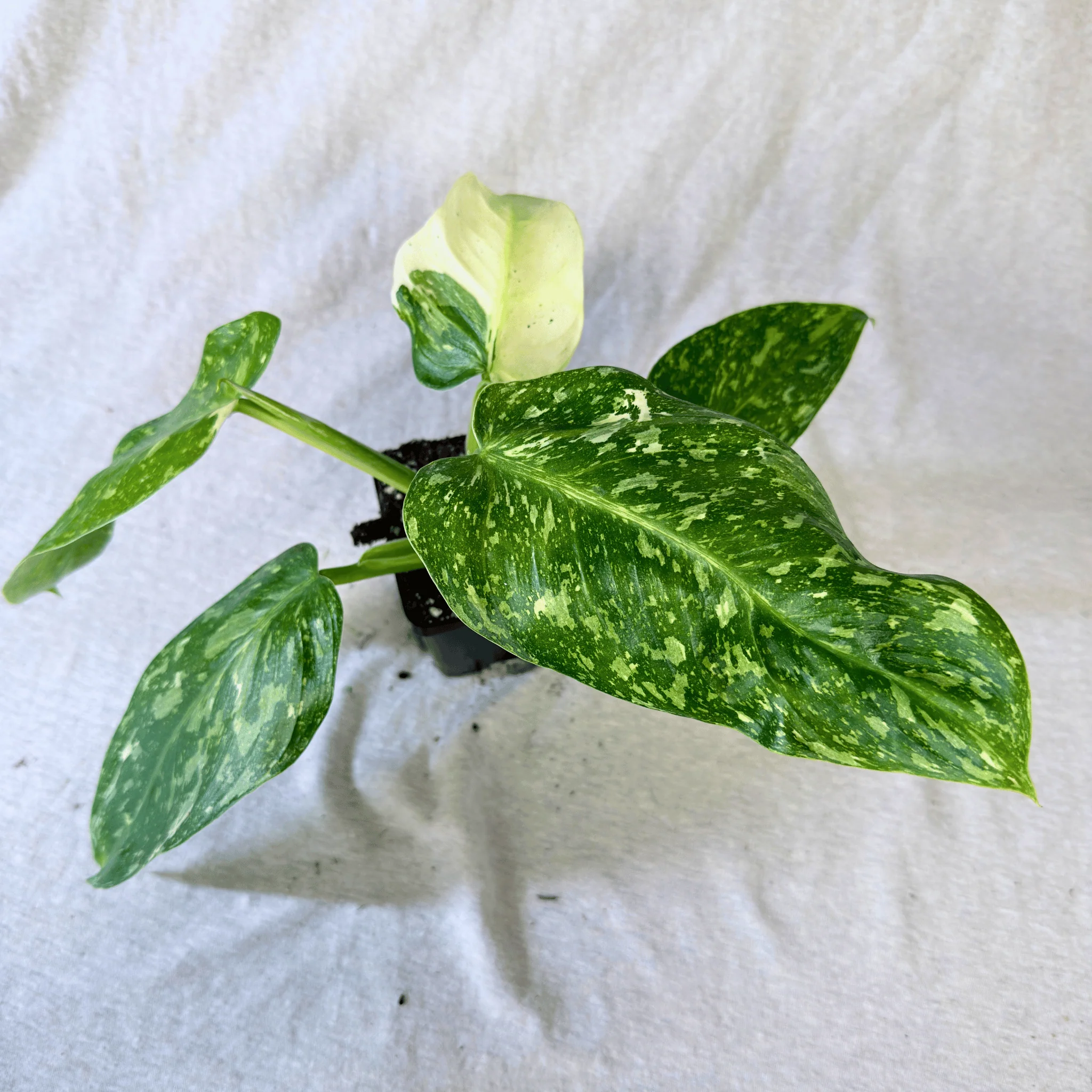
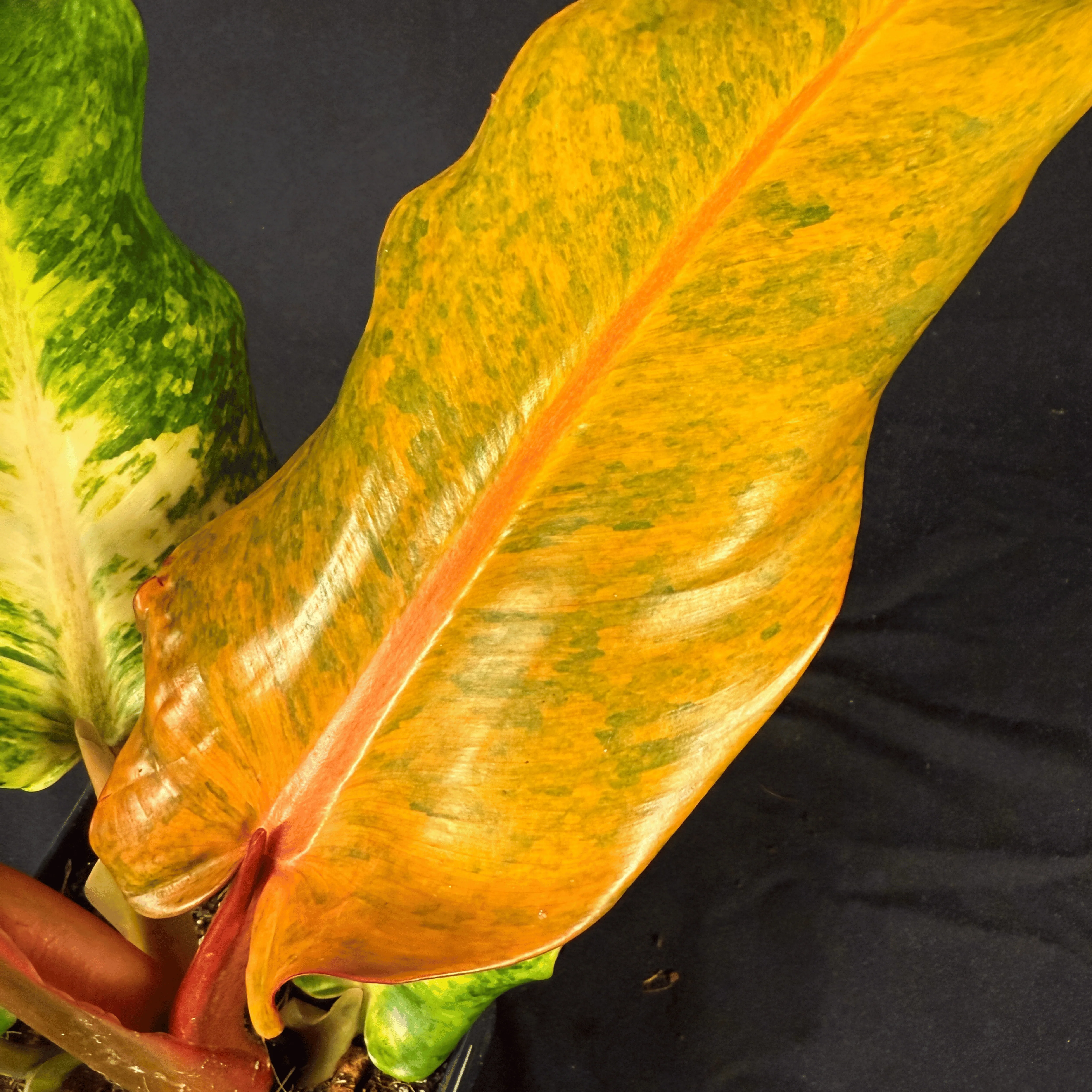
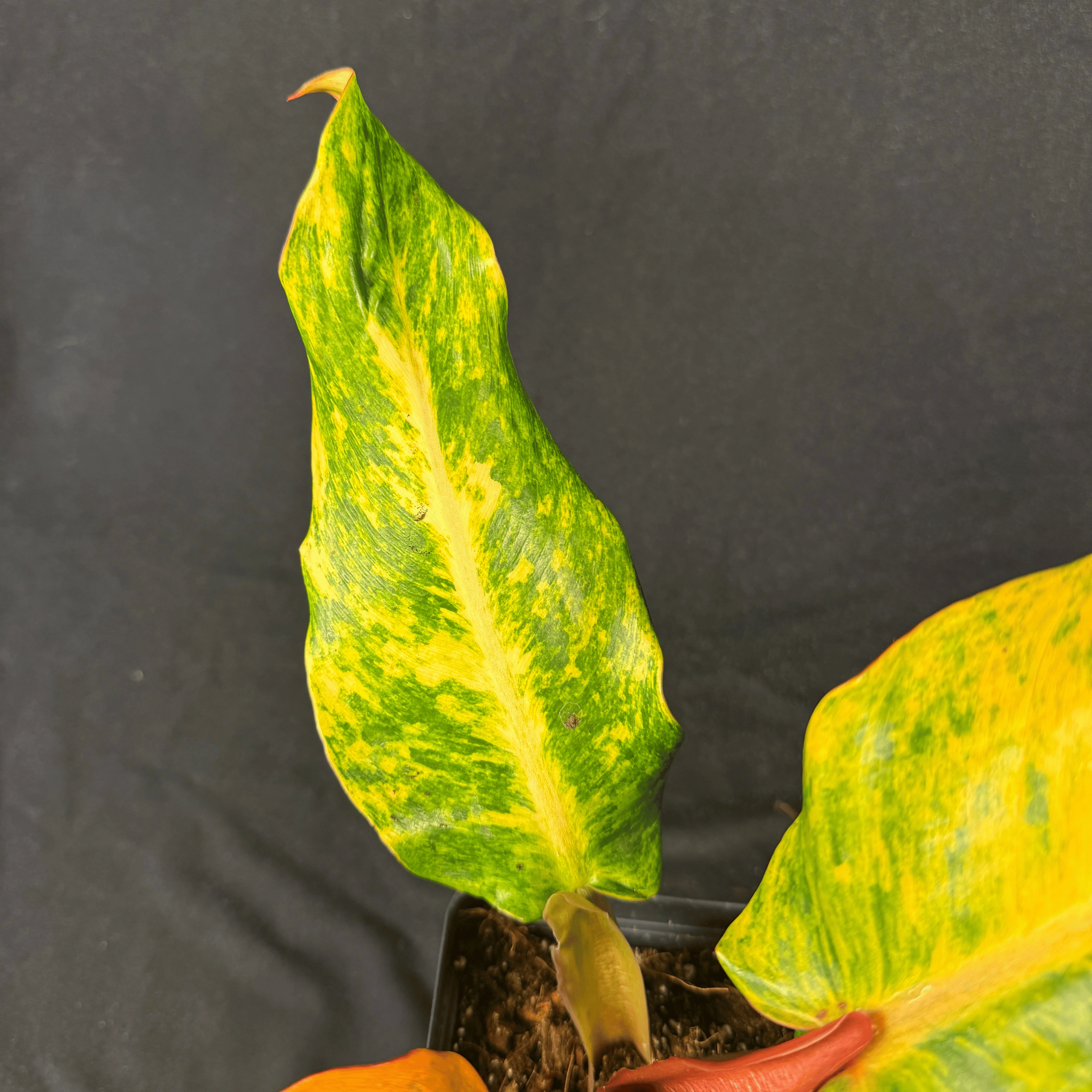
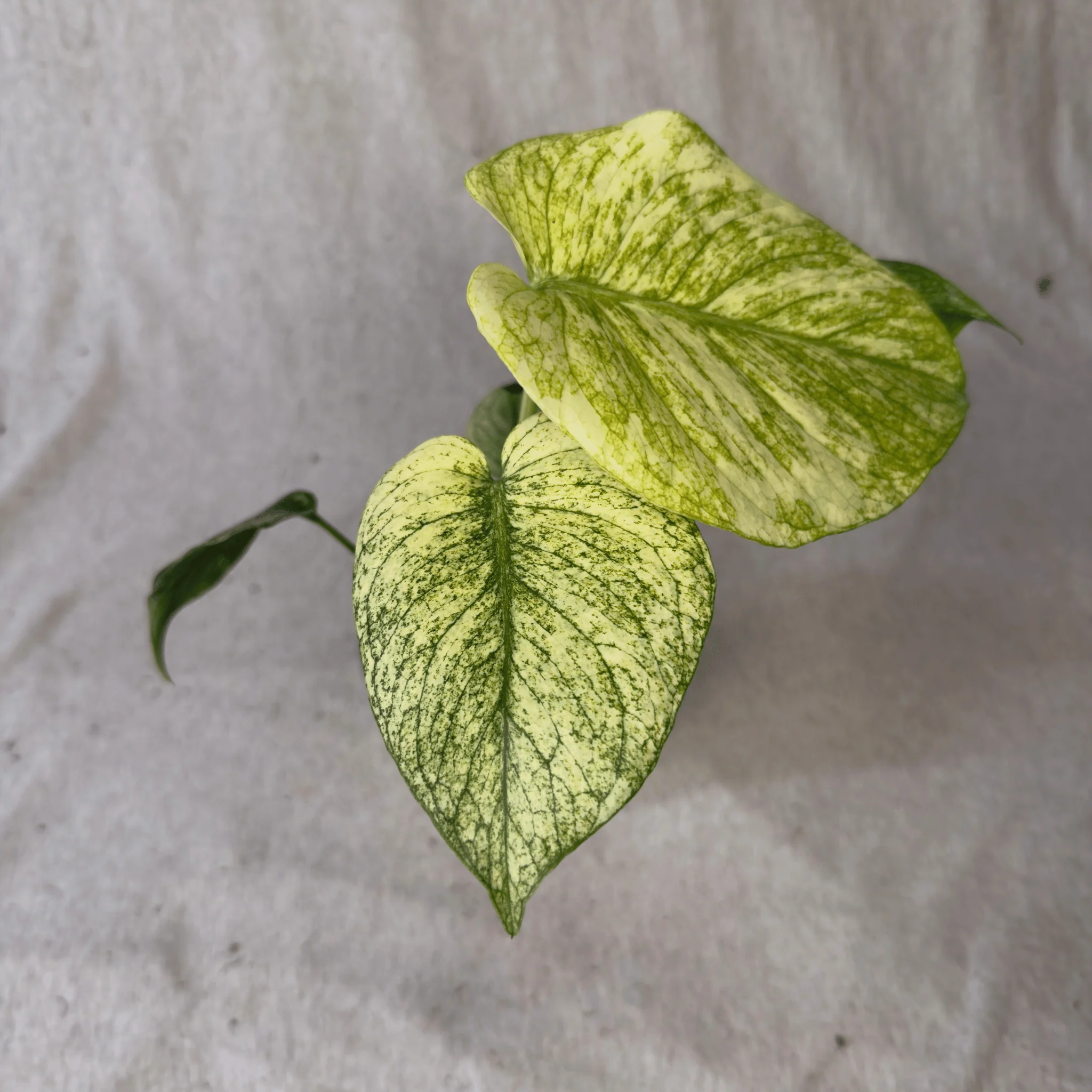
Monstera ‘White Monster Denser’ is a highly sought-after variegated form of Monstera deliciosa, prized for its dense, high-contrast white marbling. Unlike lighter marbling types or plants with inconsistent blotching, this form produces bold, saturated white sectors and intricate marbling that often creeps across the leaf in layered, porcelain-like patterns. The contrast against the deep green base tissue gives each leaf striking architectural presence.
The variegation results from a stable chimeric mutation in the apical meristem, where certain cell layers suppress chlorophyll production entirely. This reveals unpigmented tissue—true white, not cream—giving the plant its dramatic, high-expression look. New leaves tend to open with strong contrast, and with adequate light, each subsequent leaf typically increases in pattern clarity and fenestration.
Growth follows the classic Monstera deliciosa structure: upright, climbing, and increasingly fenestrated with age. Juvenile foliage may remain solid and unfenestrated, but once the plant is given vertical support and bright indirect light, the leaf size increases and mature cuts begin to show—often alongside even stronger white distribution.
Format
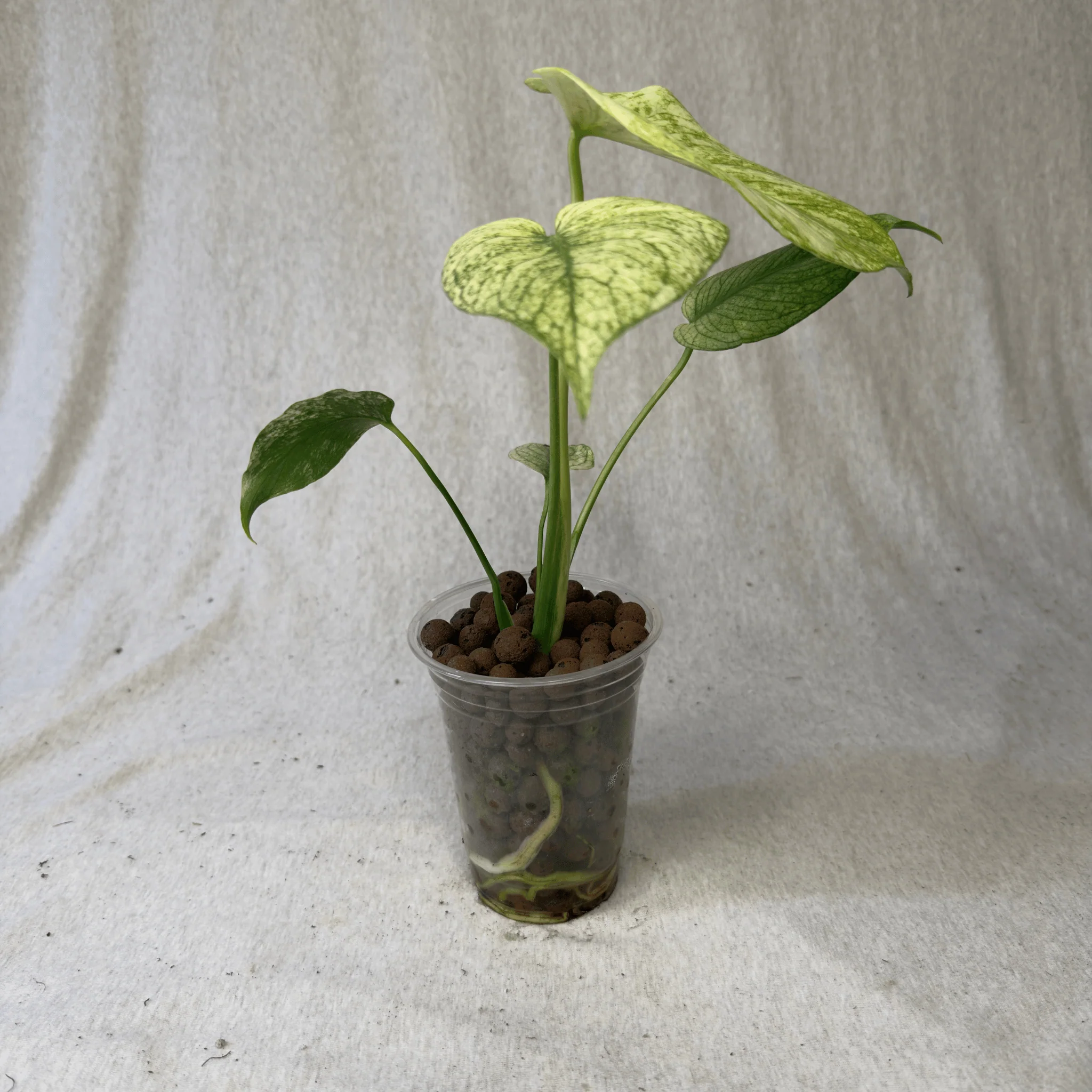
Exact Plant – Grown in LECA
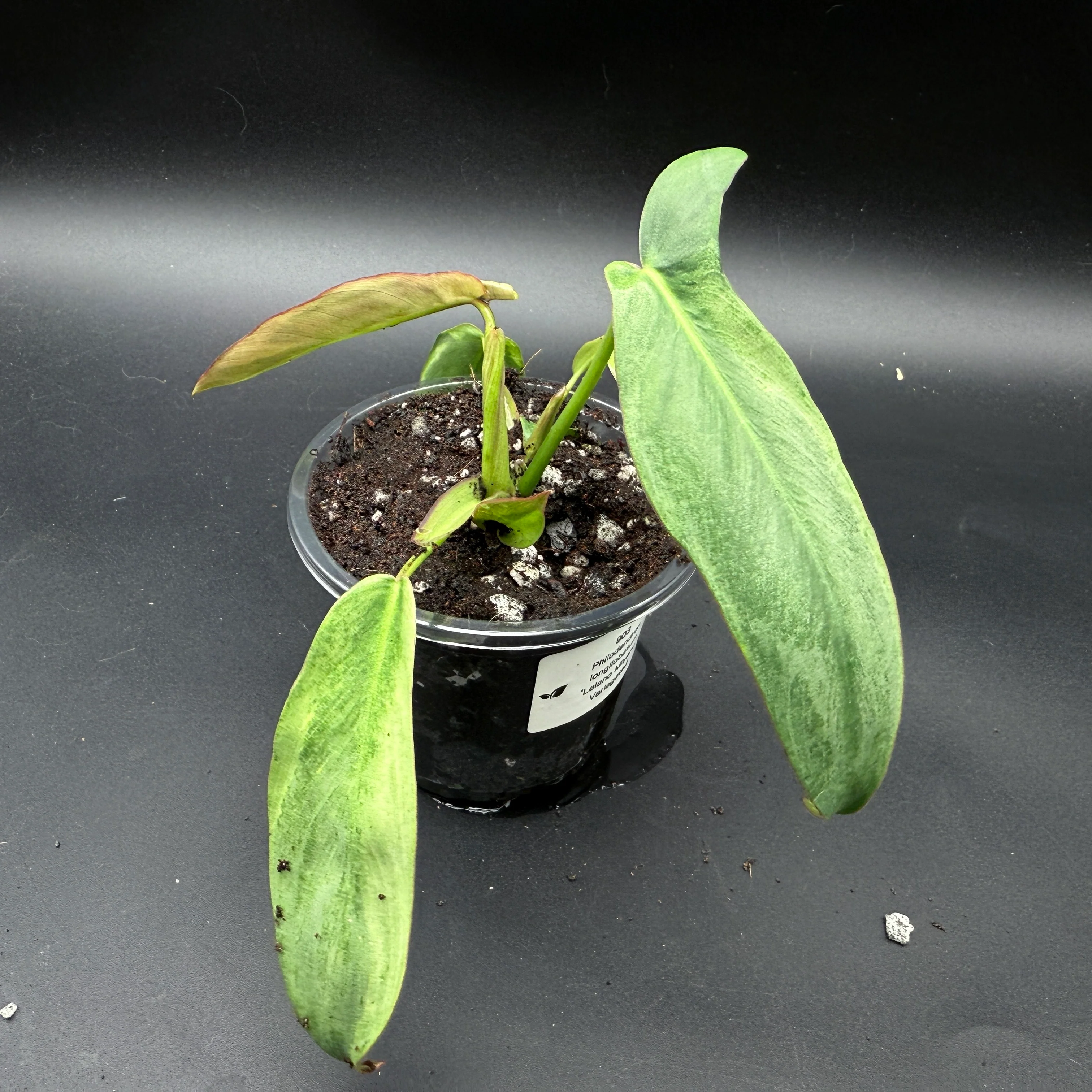
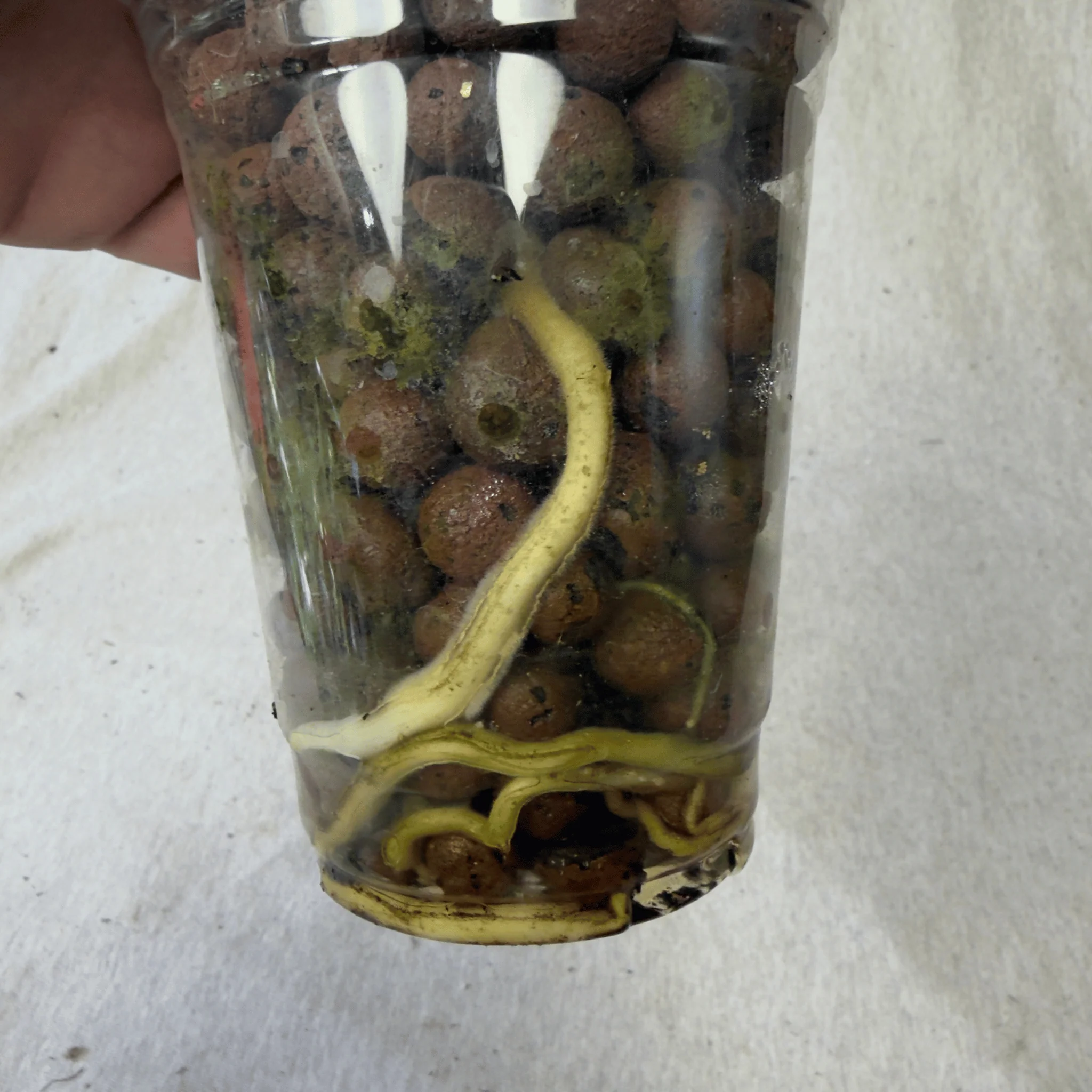
You will receive this exact plant. Currently rooted in LECA, fully acclimated, and actively producing high-variegation white growth. For safe transit, it will ship bareroot (LECA removed) with the root system protected, hydrated, and clean.
Monstera ‘White Monster Denser’ Care Overview
| Requirement | Details |
|---|---|
| Light | Bright, indirect light. Essential for preserving dense white pigmentation and preventing reversion. |
| Humidity | 60–85%. Supports strong leaf expansion and cleaner fenestrations. |
| Watering | Allow LECA reservoir to stay lightly moist when grown semi-hydro. Avoid letting roots sit in stagnant or dirty water. |
| Substrate | Ideal in LECA or a chunky aroid mix if transitioning back to soil. |
| Temperature | 65–85°F. Protect from sudden cold; high-white plants are more sensitive. |
| Feeding | Dilute, consistent hydroponic nutrients during active growth. Too much nitrogen may cause muddier variegation. |
| Growth Habit | Climber. Stronger variegation often appears once it has a moss pole or vertical support. |
| Pests to Watch | Thrips, spider mites, and mealybugs. Clean white tissue frequently to avoid discoloration. |
Shipping Note
This plant ships bareroot with 2–3 day transit time. Heat packs and insulation are included in the price, and packaging is designed to cradle both the roots and variegated foliage. Because high-white leaves are naturally delicate, minor cosmetic blemishes—such as small scuffs or faint bruising—may occur during shipping. These are superficial only and do not affect the plant’s health or long-term growth.
Your exact plant will arrive healthy, hydrated, and ready to continue growing—whether you return it to LECA or transition it to a soil-based aroid mix.
Original: $250.00
-70%$250.00
$75.00Product Information
Product Information
Shipping & Returns
Shipping & Returns
Description
High-Expression Variegation With Serious Collector Appeal
Monstera ‘White Monster Denser’ is a highly sought-after variegated form of Monstera deliciosa, prized for its dense, high-contrast white marbling. Unlike lighter marbling types or plants with inconsistent blotching, this form produces bold, saturated white sectors and intricate marbling that often creeps across the leaf in layered, porcelain-like patterns. The contrast against the deep green base tissue gives each leaf striking architectural presence.
The variegation results from a stable chimeric mutation in the apical meristem, where certain cell layers suppress chlorophyll production entirely. This reveals unpigmented tissue—true white, not cream—giving the plant its dramatic, high-expression look. New leaves tend to open with strong contrast, and with adequate light, each subsequent leaf typically increases in pattern clarity and fenestration.
Growth follows the classic Monstera deliciosa structure: upright, climbing, and increasingly fenestrated with age. Juvenile foliage may remain solid and unfenestrated, but once the plant is given vertical support and bright indirect light, the leaf size increases and mature cuts begin to show—often alongside even stronger white distribution.
Format
Exact Plant – Grown in LECA
You will receive this exact plant. Currently rooted in LECA, fully acclimated, and actively producing high-variegation white growth. For safe transit, it will ship bareroot (LECA removed) with the root system protected, hydrated, and clean.
Monstera ‘White Monster Denser’ Care Overview
| Requirement | Details |
|---|---|
| Light | Bright, indirect light. Essential for preserving dense white pigmentation and preventing reversion. |
| Humidity | 60–85%. Supports strong leaf expansion and cleaner fenestrations. |
| Watering | Allow LECA reservoir to stay lightly moist when grown semi-hydro. Avoid letting roots sit in stagnant or dirty water. |
| Substrate | Ideal in LECA or a chunky aroid mix if transitioning back to soil. |
| Temperature | 65–85°F. Protect from sudden cold; high-white plants are more sensitive. |
| Feeding | Dilute, consistent hydroponic nutrients during active growth. Too much nitrogen may cause muddier variegation. |
| Growth Habit | Climber. Stronger variegation often appears once it has a moss pole or vertical support. |
| Pests to Watch | Thrips, spider mites, and mealybugs. Clean white tissue frequently to avoid discoloration. |
Shipping Note
This plant ships bareroot with 2–3 day transit time. Heat packs and insulation are included in the price, and packaging is designed to cradle both the roots and variegated foliage. Because high-white leaves are naturally delicate, minor cosmetic blemishes—such as small scuffs or faint bruising—may occur during shipping. These are superficial only and do not affect the plant’s health or long-term growth.
Your exact plant will arrive healthy, hydrated, and ready to continue growing—whether you return it to LECA or transition it to a soil-based aroid mix.