


Monstera Yellow Marilyn - Exact Plant
Bright variegation with dramatic potential
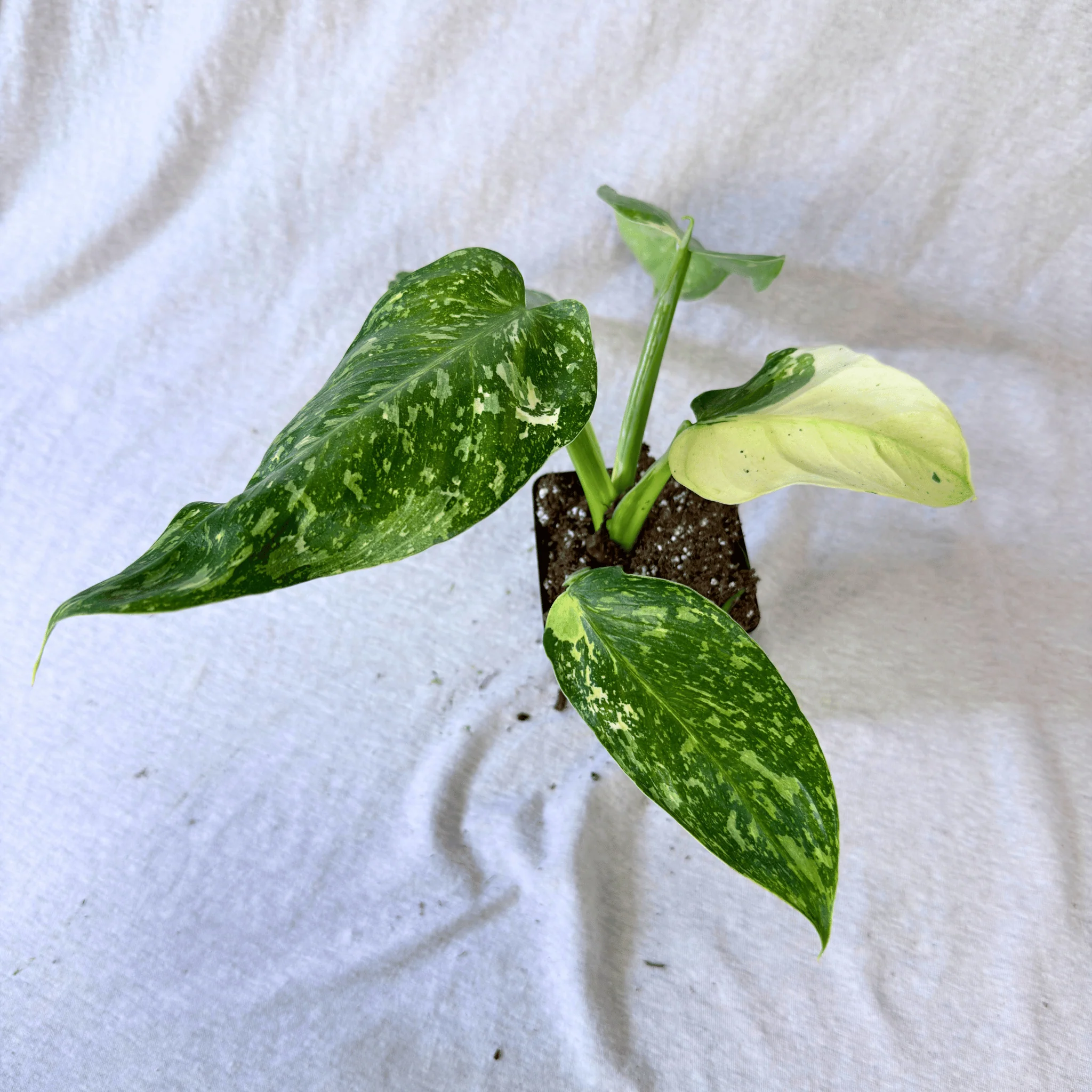
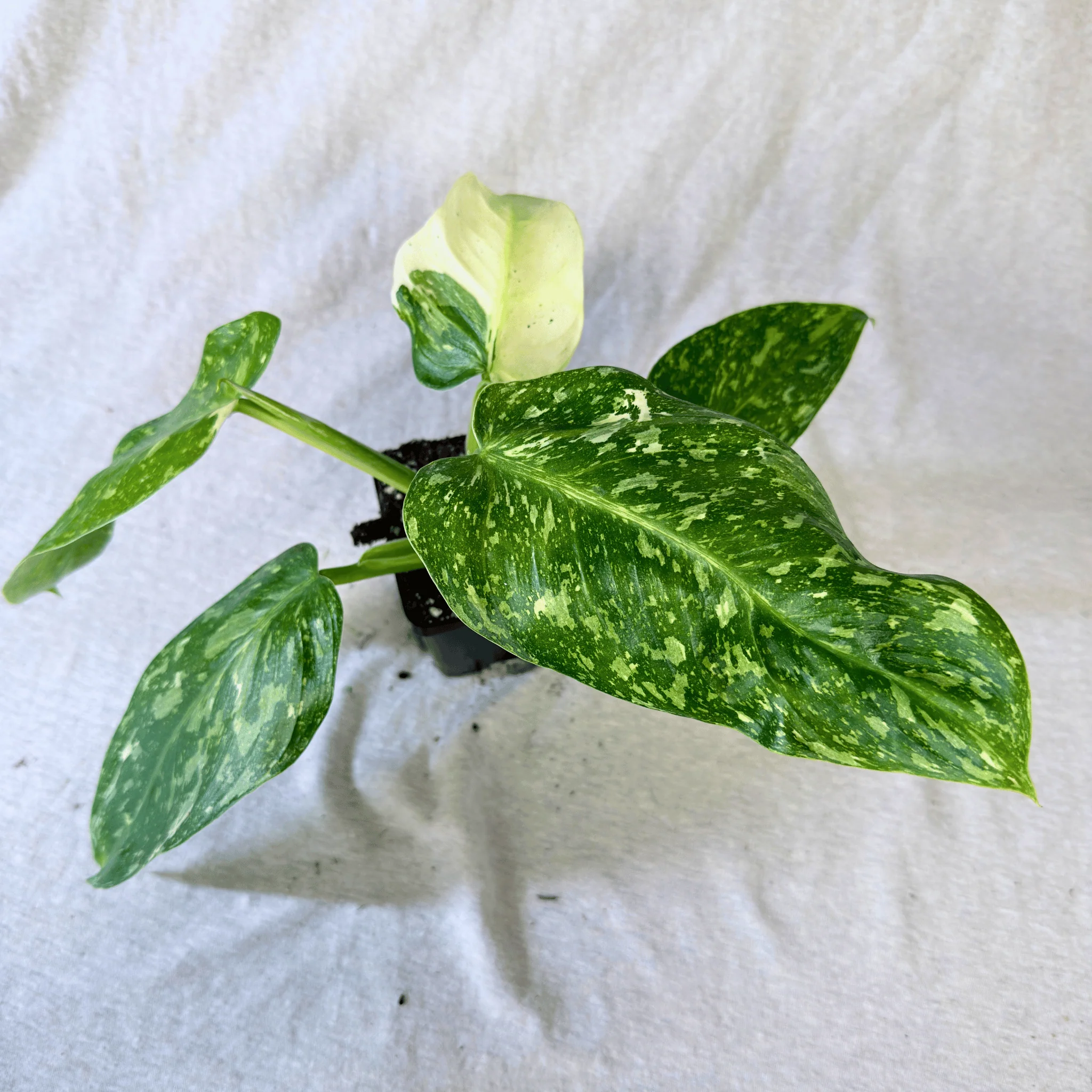
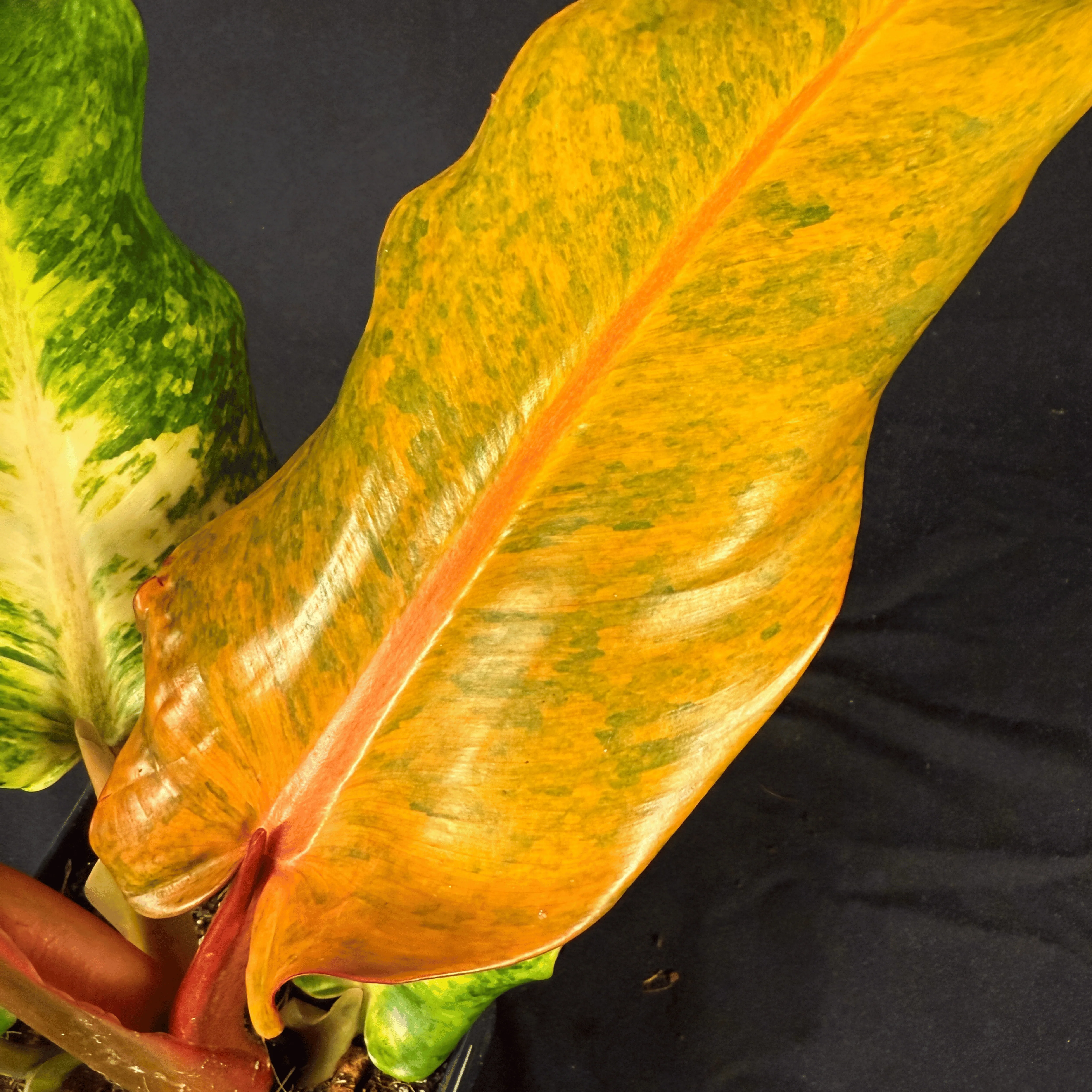
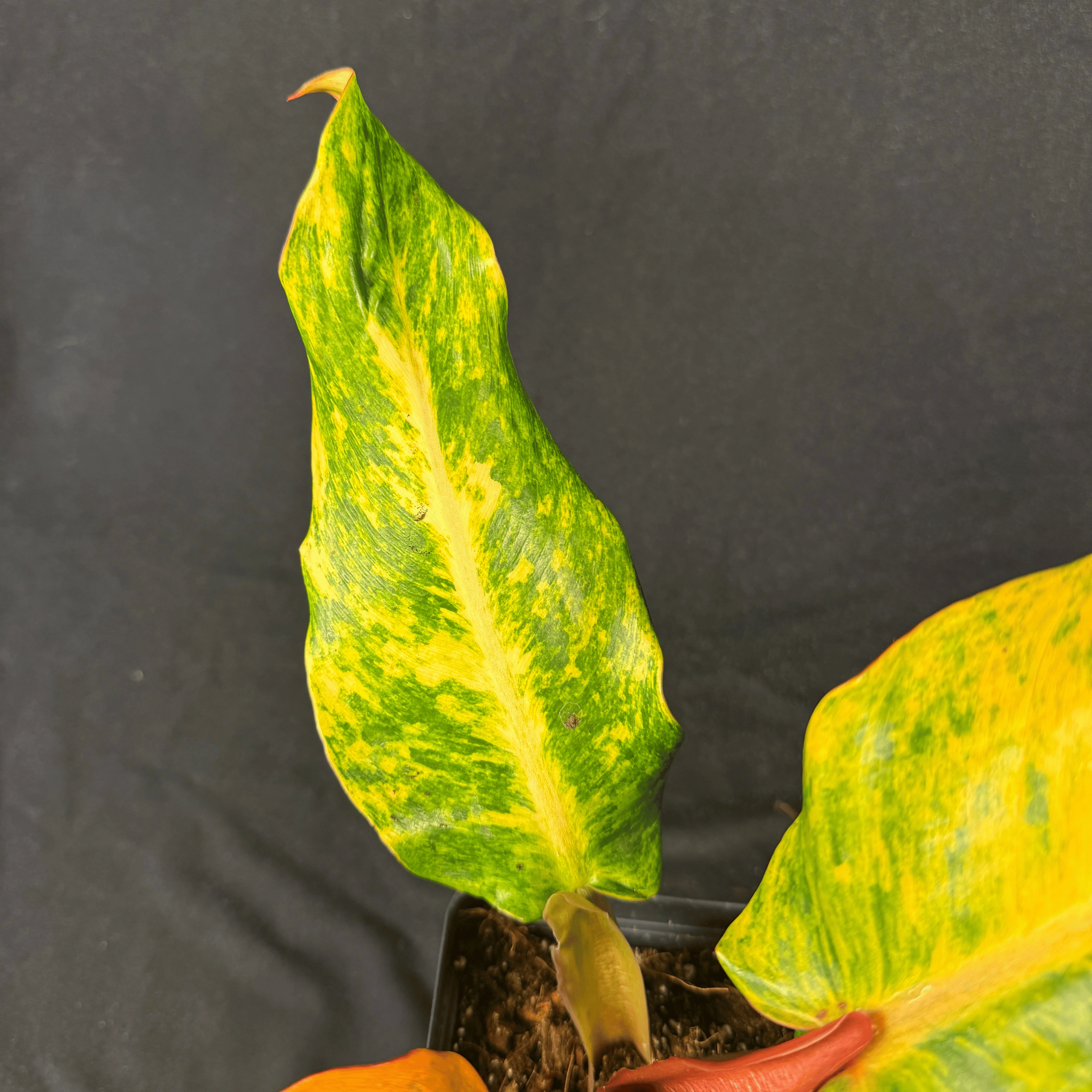
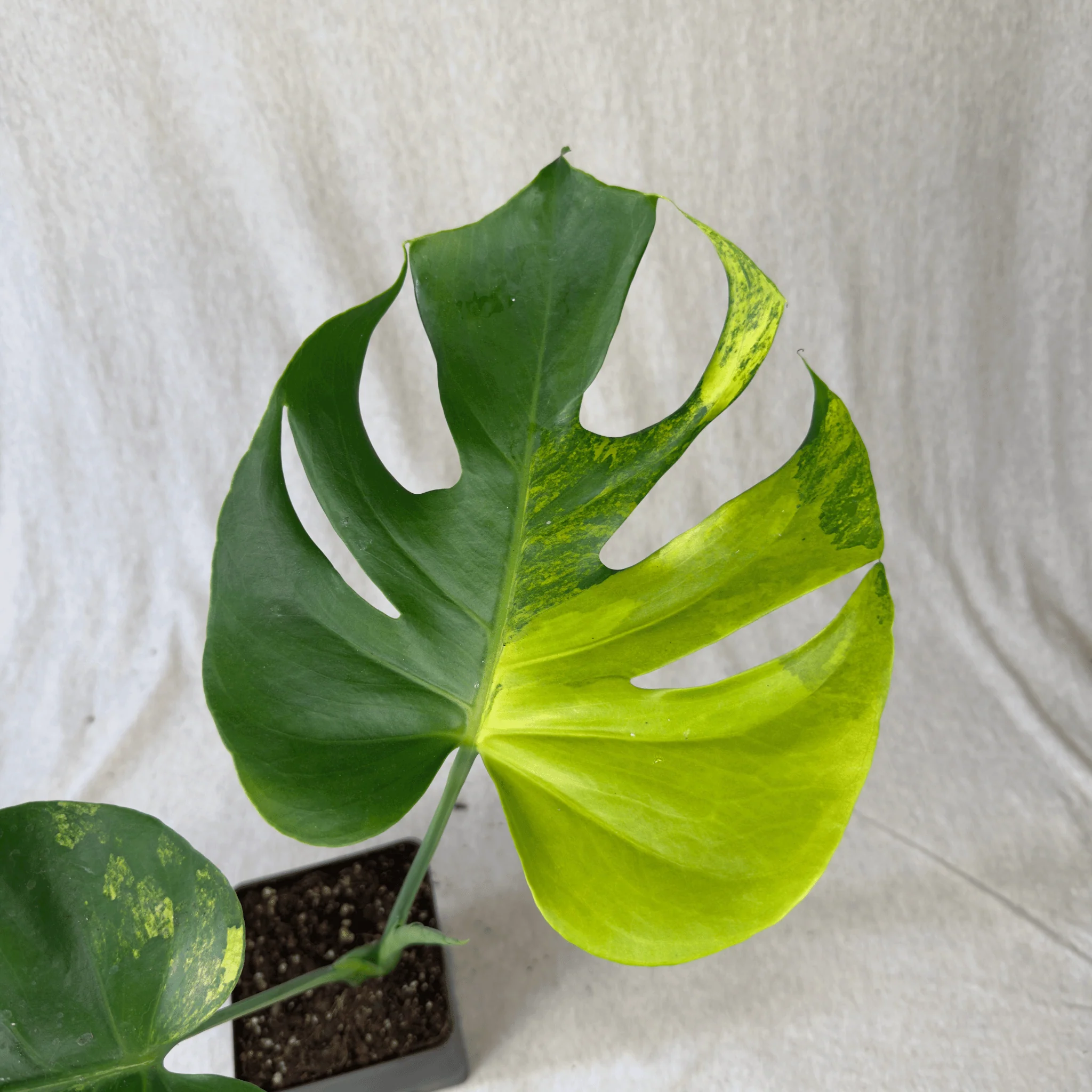
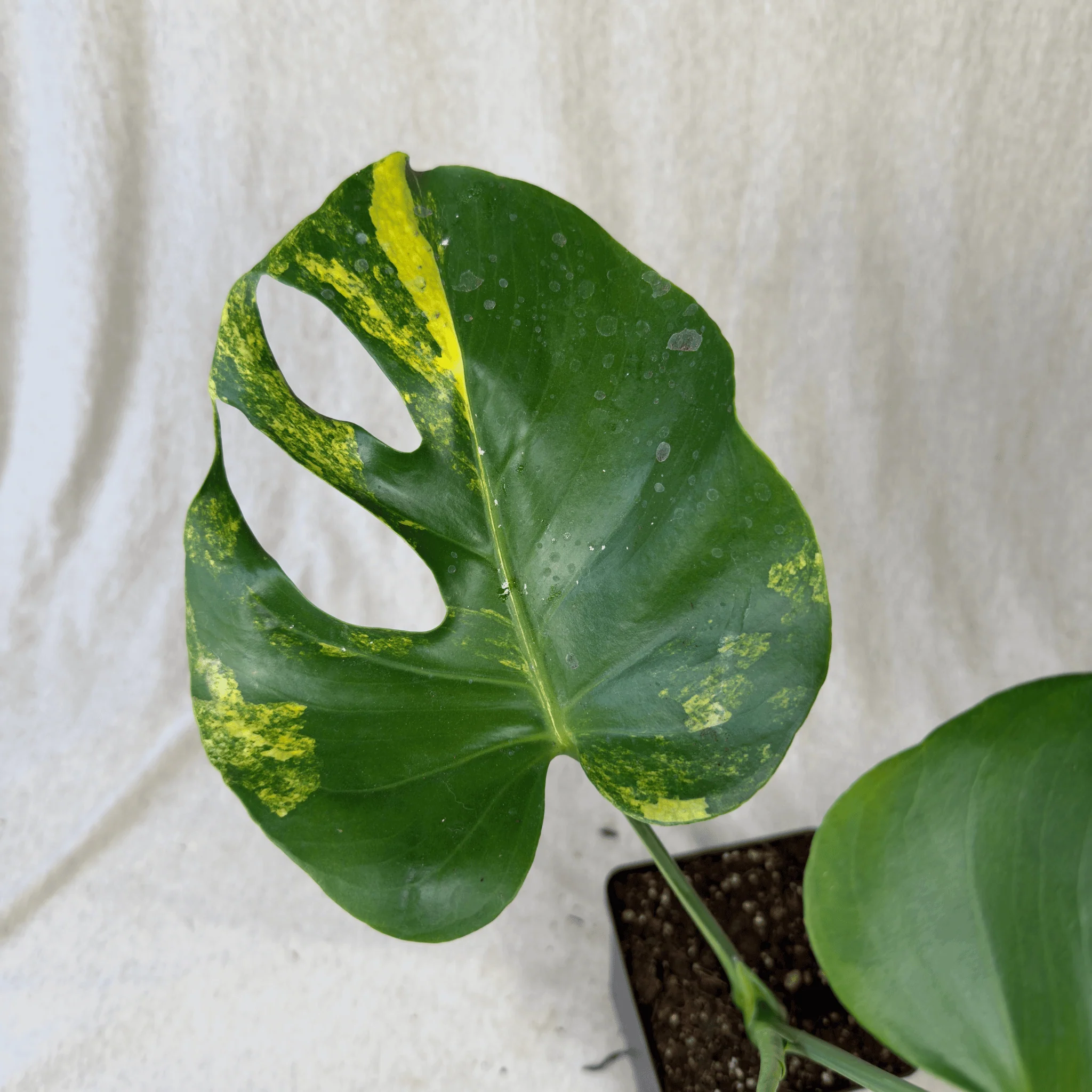
Monstera ‘Yellow Marilyn’ is a variegated form of Monstera deliciosa, known for its bold aurea pigmentation—marbled or sectoral patches in lemon yellow, lime, and soft chartreuse spread across deep green fenestrated leaves. Unlike unstable or speckled aurea types, ‘Yellow Marilyn’ tends to hold its color reliably and displays broader, more intentional contrast.
The variegation is caused by chimeric cell-layer mutation, where certain tissue layers in the apical meristem produce reduced chlorophyll, revealing warm-toned carotenoids. This gives each new leaf a one-of-a-kind pattern, with color intensity influenced by light, temperature, and nutrient availability.
Structurally, this plant follows the typical Monstera deliciosa growth pattern—large, upright, and climbing with deeply lobed leaves that increase in size and complexity as it matures. Juvenile leaves emerge with solid hearts, but as the plant gains vertical support and adequate light, fenestrations begin to appear—often alongside even stronger variegation.
Format
-
Exact Plant – 4" Pot
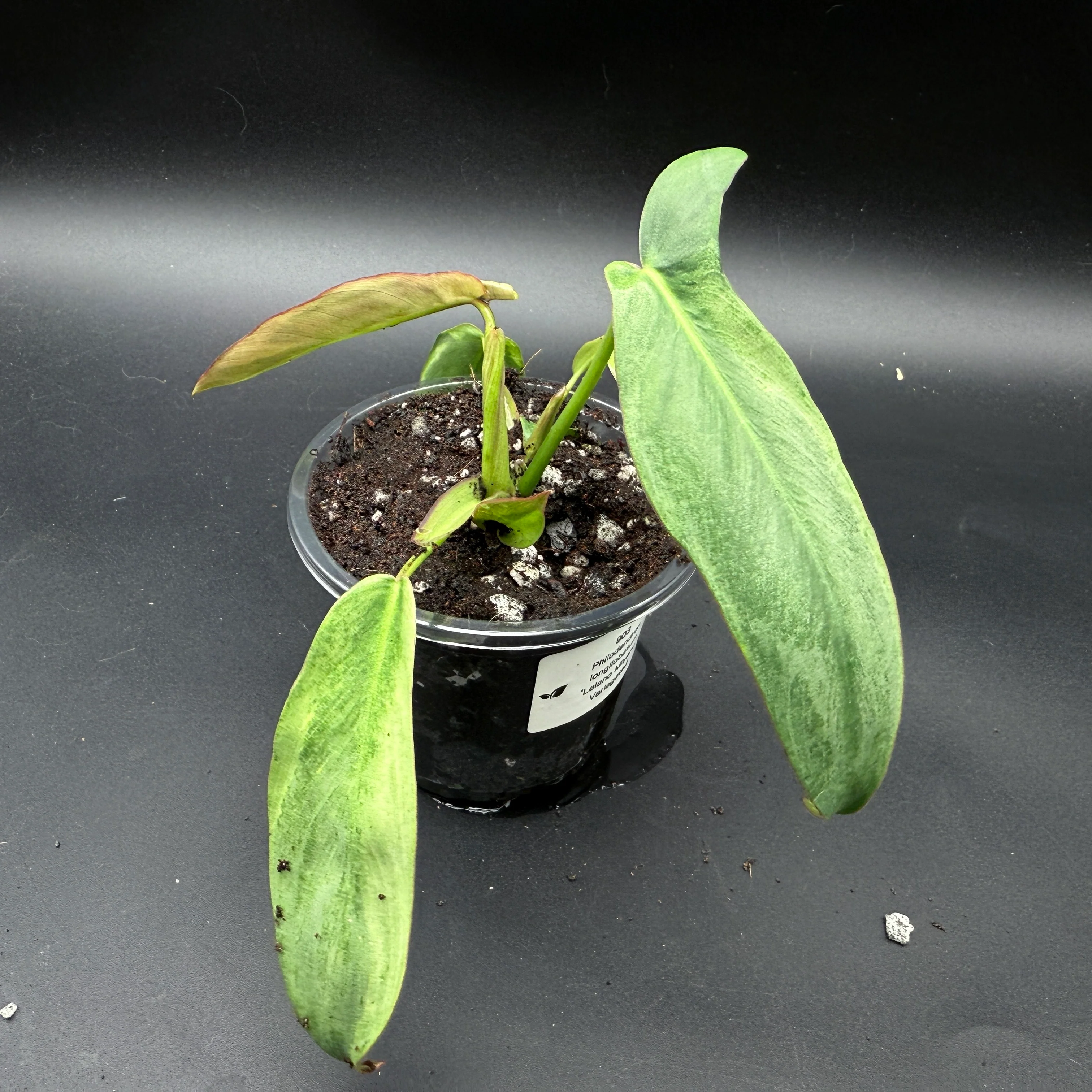
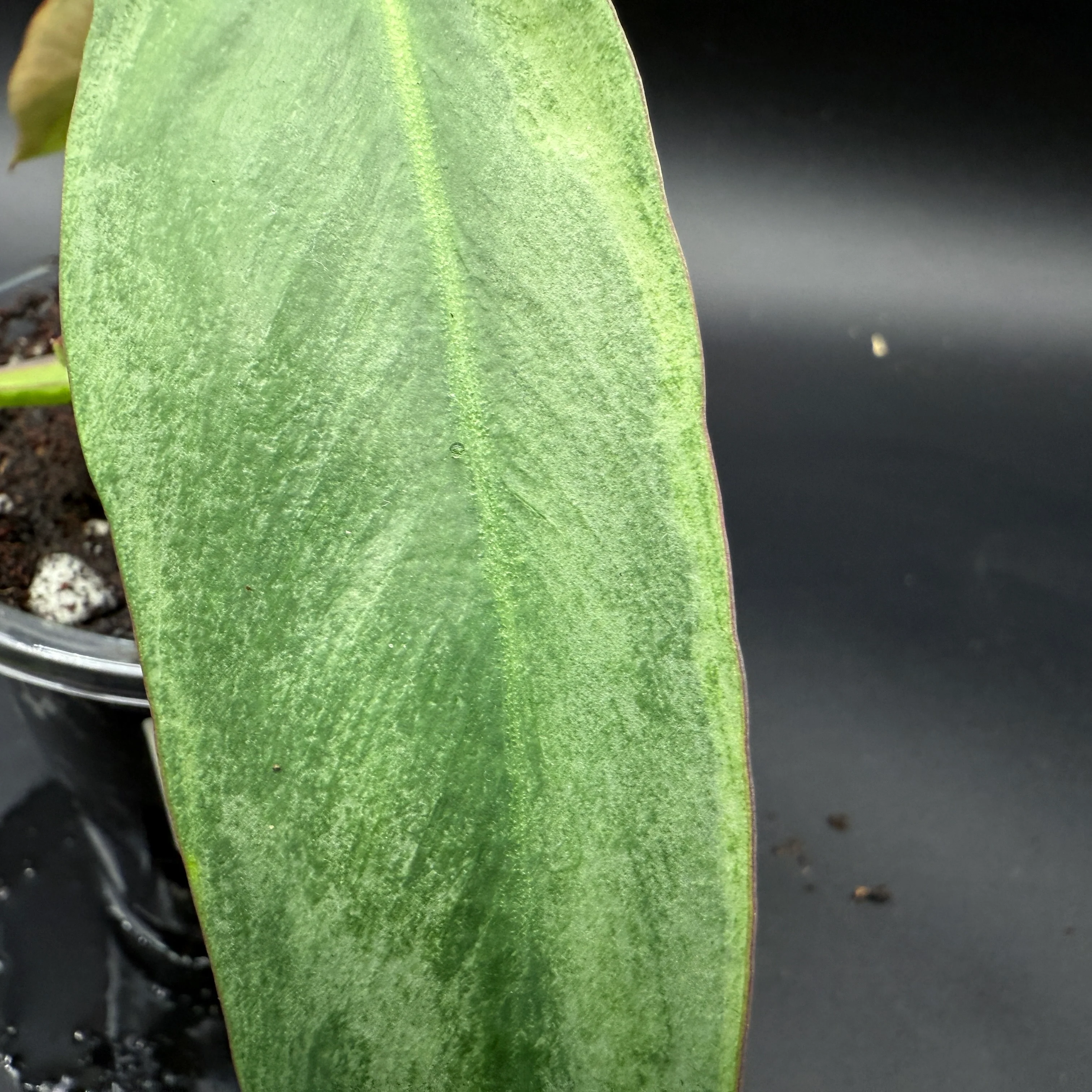
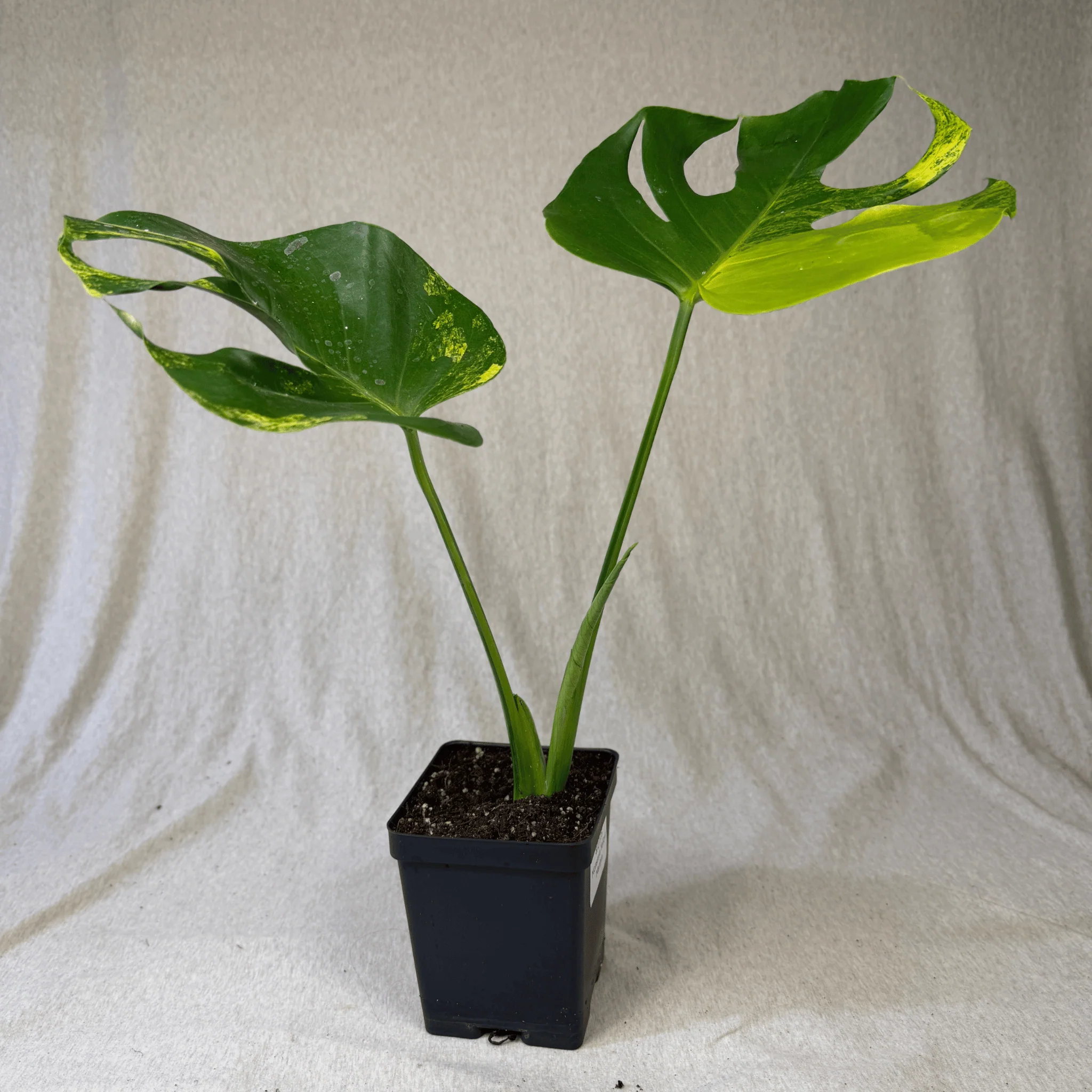
The plant shown. Rooted in soil, fully acclimated, and actively producing aurea-variegated growth. You’ll receive this exact specimen—no placeholders or cuttings.
Monstera ‘Yellow Marilyn’ Care Overview
| Requirement | Details |
|---|---|
| Light | Bright, indirect light. Essential for maintaining yellow pigment. |
| Humidity | 60–85%. Encourages larger leaves and cleaner fenestration. |
| Watering | Water when the top 1–2" of soil dries out. Avoid keeping roots soggy. |
| Substrate | Aroid mix with peat, perlite, bark, and pumice. |
| Temperature | 65–85°F. Protect from drafts and cold dips. |
| Feeding | Monthly during active growth. Use a balanced or low-nitrogen formula to preserve color. |
| Growth Habit | Climber. Will need vertical support to size up. |
| Pests to Watch | Thrips and spider mites. Clean leaves regularly, especially pale tissue. |
Shipping Note
This plant ships rooted in soil, packed carefully to protect foliage and roots. Because of the leaf size and pale variegation, minor cosmetic blemishes may occur during transit, such as edge scuffing or yellowing. These are superficial only and do not impact the plant’s health. Your exact plant will arrive clean, healthy, and ready to keep growing.
Original: $300.00
-70%$300.00
$90.00Product Information
Product Information
Shipping & Returns
Shipping & Returns
Description
Bright variegation with dramatic potential
Monstera ‘Yellow Marilyn’ is a variegated form of Monstera deliciosa, known for its bold aurea pigmentation—marbled or sectoral patches in lemon yellow, lime, and soft chartreuse spread across deep green fenestrated leaves. Unlike unstable or speckled aurea types, ‘Yellow Marilyn’ tends to hold its color reliably and displays broader, more intentional contrast.
The variegation is caused by chimeric cell-layer mutation, where certain tissue layers in the apical meristem produce reduced chlorophyll, revealing warm-toned carotenoids. This gives each new leaf a one-of-a-kind pattern, with color intensity influenced by light, temperature, and nutrient availability.
Structurally, this plant follows the typical Monstera deliciosa growth pattern—large, upright, and climbing with deeply lobed leaves that increase in size and complexity as it matures. Juvenile leaves emerge with solid hearts, but as the plant gains vertical support and adequate light, fenestrations begin to appear—often alongside even stronger variegation.
Format
-
Exact Plant – 4" Pot
The plant shown. Rooted in soil, fully acclimated, and actively producing aurea-variegated growth. You’ll receive this exact specimen—no placeholders or cuttings.
Monstera ‘Yellow Marilyn’ Care Overview
| Requirement | Details |
|---|---|
| Light | Bright, indirect light. Essential for maintaining yellow pigment. |
| Humidity | 60–85%. Encourages larger leaves and cleaner fenestration. |
| Watering | Water when the top 1–2" of soil dries out. Avoid keeping roots soggy. |
| Substrate | Aroid mix with peat, perlite, bark, and pumice. |
| Temperature | 65–85°F. Protect from drafts and cold dips. |
| Feeding | Monthly during active growth. Use a balanced or low-nitrogen formula to preserve color. |
| Growth Habit | Climber. Will need vertical support to size up. |
| Pests to Watch | Thrips and spider mites. Clean leaves regularly, especially pale tissue. |
Shipping Note
This plant ships rooted in soil, packed carefully to protect foliage and roots. Because of the leaf size and pale variegation, minor cosmetic blemishes may occur during transit, such as edge scuffing or yellowing. These are superficial only and do not impact the plant’s health. Your exact plant will arrive clean, healthy, and ready to keep growing.